|
|
||||||||||||||||||||
|
LEAD
Action News Volume 7 No 4, 2000, ISSN 1324-6011 |
||||||||||||||||||||
|
About Us
|
Banned: Leaded Wick Candles Australian world first with ban on
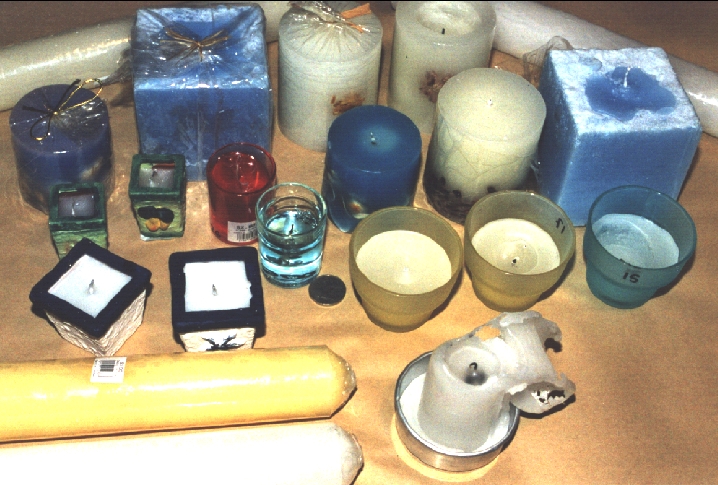
candles A fact sheet by The LEAD Group Incorporated, Sydney, Australia What is the problem with candles? Not all candles pose a risk of lead poisoning – most candles do not have a metal thread running up the centre of the wick. But all the candles with metal core wicks that have been tested have been found to contain some lead and are therefore banned in Australia as of the 1st September 1999. Not all metal cores are made of pure lead; some are lead and tin and some are mostly zinc. Some candles imported into Australia from China and Taiwan have been tested and found to have wicks containing a core with more than 95% lead in the wick. What is the health risk? When candles with more than 95% lead in the wick are burnt they emit 500 –1000 micrograms of lead per hour. Over one year, ½ to 1 micrograms of lead per cubic metre of air is regarded as the maximum level a child or adult should be exposed to. Long term use of these candles would contaminate carpets and soft furnishings in the house with fine particles of lead. In the short-term, high exposure risks are via inhalation. Dust wipes after several months of burning lead core wick candles in a room in Texas contained 40 mg per square foot, many times the acceptable level for a room to be regarded as safe for young children. These candles are not safe to burn!!! Young children and unborn babies are particularly at risk. Even small quantities of lead are capable of causing I.Q. loss and learning difficulties and behaviour problems. Pregnant women need to be especially wary of their lead exposure: the placenta offers no barrier to lead and it can result in miscarriage and damage to the foetus’ developing brain and nervous system. Burning lead core wick candles poses a serious risk as these candles give off lead fumes in amounts that far exceed safe levels. Candles with more than 95% lead in the wick could conceivably cause severe lead poisoning (potentially death) when more than 3 candles were burnt in a small poorly ventilated room for more than 6 hours per day on an ongoing basis. How do I tell if the wicks in my candles have a metal core? Candles which potentially have a lead wick core can only be confirmed by laboratory testing but any metal wick core is very likely to contain some lead. You can tell if there is a metal core inside the fabric sheath of the wick by looking for a darkish line in the white wick or by poking through the outer sheath with a sharp needle to reveal the metal. The metal is very fine. If the wick has already been burnt, poking with a needle you might still be able to "feel" the metal filament or you may be able to turn the candle upside-down and inspect the wick from the base of the candle. What do the metal core wick candles look like? Metal-wick core candles come in all sizes, shapes and colours, (see photo for examples). The only reliable way to identify them is to examine the wick for a metal core and have it confirmed by laboratory testing.
Where do the candles and wicks come from and where are they sold in Australia? The metal core wick candles already tested originate from the US, China and Taiwan. As more candles are tested the country list may increase. The metal core wick candles are generally cheap and have previously been available in shops with a name that denotes bargains or reject goods, though they have also been purchased in a large chain store and quality homeware shops. They have been readily available so people who are likely to purchase cheap candles are the most likely to be affected. (The candle purchased at one homeware store was $29.95 so not all these candles are cheap. The US candles with lead core wicks cost as much as US$18.95 - also not cheap!). If you find a candle with a metal core wick, the chances are it does contain lead. We advise that you buy the candle(s), keep the receipt (for evidence) and notify your state or territory department of fair trading / consumer affairs as there has been a federal ban on the supply of these candles from the 1/9/1999 which prevents their supply in the NT, and a ban on their supply in NSW (since 10/9/99), Queensland (since 17/9/99), Victoria (since 11/11/99) and ACT and Tasmania (both announced on 20/10/99 and gazetted soon after). A banning order was signed in WA on 17/12/99 and will soon be gazetted. There is a ban on the supply and manufacture of candles or wicks containing lead in SA (since 23/9/99). How many candles are we talking about?
What should I do if I have bought a candle with a metal core and I suspect it contains lead? You could return the candle to the shop you purchased it from and ask for a refund or an exchange, pointing out to the retailer that supply of the product is in breach of a Federal and/or State ban. The right thing for the retailer to do would be to offer a refund or an exchange of the product, although he/she is under no legal obligation to do so, as there has been no recall of the product. Can I sue the retailer for supplying a prohibited product? Yes, in the States where the prohibition order has been gazetted, you could elect to instigate legal proceedings in the Fair Trading Tribunal in NSW or its equivalent in other States. You should then keep the proof of purchase, ie the docket with the date of purchase, and the retailer’s name. Evidence of the presence of lead in the candle wick should be provided. An analytical report of the lead content of the wick of the candle should be obtained. It is also important that a continuous chain of custody of the candle be shown, with the candle being kept in a safe place and a statement signed by the laboratory which analysed the candle, stating that they have removed the wick from that particular candle and that analysis showed it to contain lead. Any quantity of lead in the wick of the candle makes it a prohibited product. Instigating legal proceeding myself could be costly, is there any other way I can ensure the enforcement of the prohibition on candles containing lead? Yes, you can decide to lodge a complaint with your State department responsible for fair trading/ consumer affairs (in NSW it is the Department of Fair Trading). The process is simple. Just obtain a complaint form from your department; complete the required details on the place and date of purchase, and the nature of the complaint. The department will then investigate the matter and decide whether to prosecute the retailer for breach of the prohibition order. What do I do next if I’ve been burning metal core wick candles? First, stop using the candles. Second, have a blood lead test. This is the only way to tell if you’ve been lead poisoned by the candles. Your GP can either take the blood and send it to a lab or send you to a pathologist for this. If you hate blood tests, wear an anaesthetic band-aid over the vein on the inside of your arm at the elbow (eg EMLA Patch, available over the counter from the chemist) for at least one hour before the blood is taken. Wear an extra layer of clothing than you normally would for the weather on the day, and have plenty to eat and drink before the test. The result may take 1 – 2 weeks to come back. If the result is higher than 10 micrograms/decilitre (or 0.48 micromoles per litre) then call the Lead Advisory Service Australia on 1800 626 086 or your local Public Health Unit if the result is above 15 micrograms/decilitre (or 0.72 micromoles per litre) - the level for notification in NSW and Queensland. The home may need to be investigated for lead sources if blood test results exceed these levels. You may need hospital admission for lead poisoning (even if you currently show no symptoms) if your blood lead level is excessive. Acknowledgments: thanks go to Mike van Alphen of Lead Sense in Adelaide for testing design and the laboratory analysis and for bringing this important issue to the attention of The LEAD Group. Mike van Alphen is now on the Technical Advisory Board of The LEAD Group Inc and kindly reviewed this fact sheet. Thanks also to other Technical Advisory Board members who assisted in the review of the information in this fact sheet:
|
|||||||||||||||||||
|
|
||||||||||||||||||||
|
The LEAD Group Inc. Fact Sheet Index |
||||||||||||||||||||
|
NSW
Lead Reference Centre and NSW Government Publications On this site
|
||||||||||||||||||||
|
||||||||||||||||||||
|
About
Us |
bell
system lead poisoning |
Contact Us
| Council
LEAD Project | egroups | Library
- Fact Sheets | Home
Page | Media Releases |
||||||||||||||||||||
|
Last
Updated 02 May 2014
|
||||||||||||||||||||