|
|
|||
|
7 no 1, 1999 |
|||
|
About Us
Visitor
Number |
Beethoven Lead Poisoned by Danube Fish By Claus
Geissmar, reprinted from the Daily Telegraph,
The fish caught in what was then a particularly heavily polluted stretch of the scenic river, were one of Beethoven’s favourite dishes – and they were heavily contaminated with lead. Chicago researchers made their discovery while examining a 15cm long hair of the composer’s which let them draw conclusions about Beethoven’s DNA structure. Rumours about the reasons for Beethoven’s death started making the rounds shortly after his burial. His secretary caused a sensation by claiming that medical quacks had killed the composer. He mentioned morphium and arsenic as the causes of death. The official explanation has always been that he died of a liver infection – but that was just an official description of his symptoms, not a statement of cause of death. That all turns out to have been pure speculation. Based on their DNA analysis of the hair, scientists have been able to reach very precise conclusions about the chemical make up of Beethoven’s body in his last six months of life. No indications of morphium were present and only minimal traces of arsenic were found, which probably came from his living room carpet. Carpets of that era usually used a glue that contained arsenic. Music researchers know that the young Beethoven was a lively man, who spent nearly all his free time in the country. Unhappily for him, fish from the Danube were his favourite food. Ultimately, the fish avenged themselves by introducing the lead poison that finally killed him as he ate them. Industrial historians have established that in the early 19th century, at the start of the industrial revolution, heavy metals – lead among them – were dumped in the Danube or on its banks. |
||
|
About
Us |
bell
system lead poisoning |
Contact Us
| Council
LEAD Project | egroups | Library
- Fact Sheets | Home
Page | Media Releases |
|||
|
Last
Updated 12 December 2014
|
|||

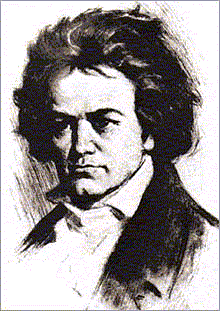 Thousands of Beethoven’s mourners
escorted his remains to their burial place in Vienna in 1827, and to a man they all
believed the 50 year old, dear musical genius had died of liver disease and dropsy. Now, scientists at
a Chicago research institute have found out the truth: Danube river fish killed him.
Thousands of Beethoven’s mourners
escorted his remains to their burial place in Vienna in 1827, and to a man they all
believed the 50 year old, dear musical genius had died of liver disease and dropsy. Now, scientists at
a Chicago research institute have found out the truth: Danube river fish killed him.