|
|
|||||
|
LEAD Action News Vol 3 no 2 Autumn 1995 ISSN 1324-6011 |
|||||
|
About Us
|
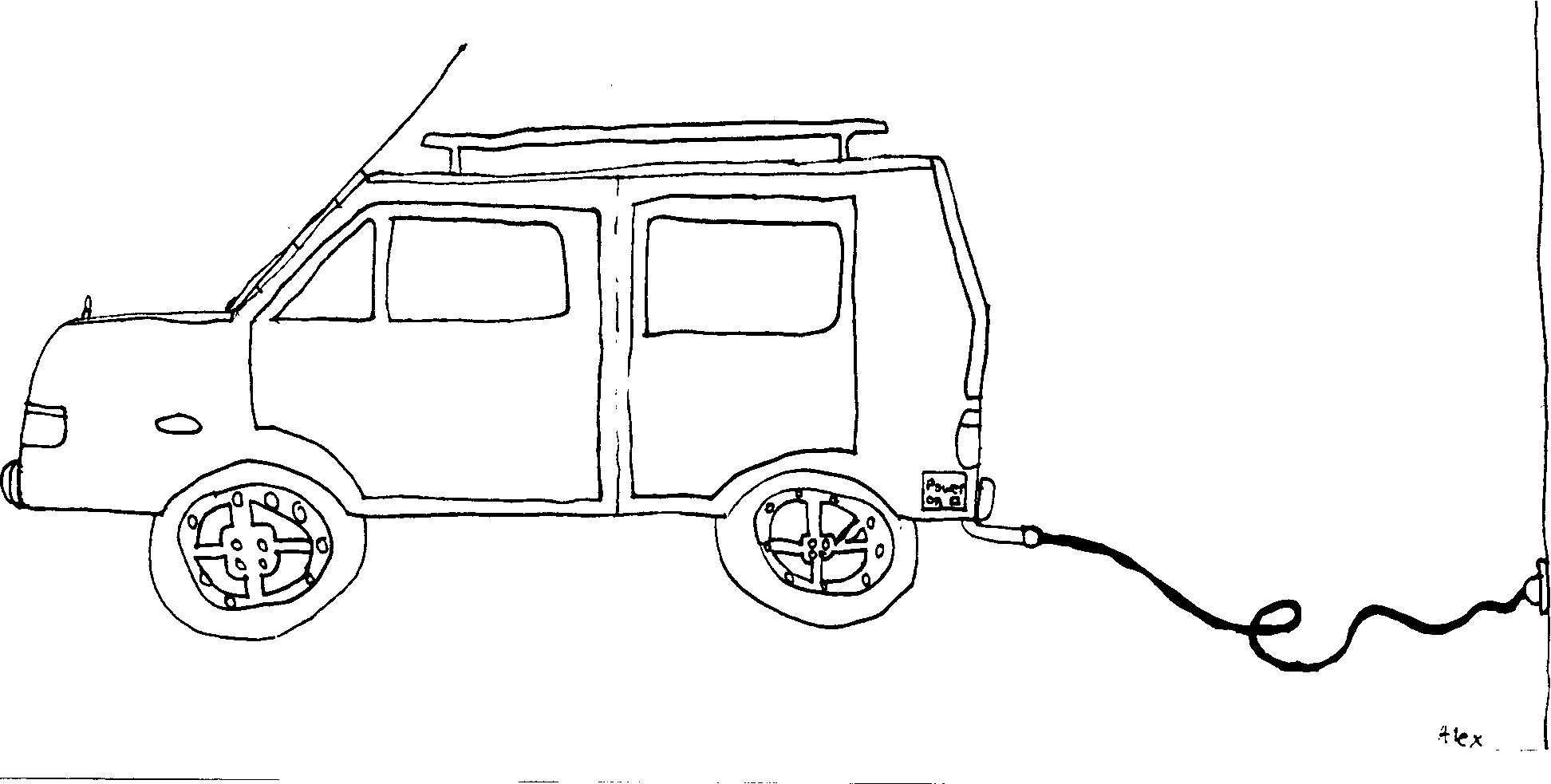
Electric cars and lead pollution by Ann Gethin Electric cars have been thought of as one answer to our dependence on fossil fuel burning vehicles. Their main appeal is that they produce no air pollution at the point of use so provide a way of shifting emissions to less polluted areas. Unfortunately also "out of sight" are the environmental consequences of manufacturing and recycling the lead- acid batteries electric vehicles require to run on. A recent report in Science (Lave et al, vol. 268, p 993. May 1995) drew attention to the problem of lead batteries in electric cars: "Smelting and recycling the lead for these batteries will result in substantial releases of lead to the environment". The researchers compared the power, efficiency and environmental effects of electric cars with petrol powered vehicles. Not only are electric cars comparatively slower and far more restricted in the distance they can travel but release more lead into the environment as well. The study showed that an electric car with batteries made from newly mined lead releases 60 times more lead than that of a car using leaded petrol. (Their example uses the relatively high 2.1 g/gallon leaded petrol used in the US in 1972 and in some Australian states up to the 1990). Although the lead discharged in lead smelting and reprocessing is generally less available to humans in the U.S. than that dispersed by leaded petrol cars driving where people are living (only one percent of U.S. petrol sold is leaded) - there are still significant hazards. Lead processing facilities release lead into the air and waterways, and lead in solid waste leaches slowly into the environment.
Clearly electric cars, despite their "good for the environment" image create far more of a problem than leaded petrol cars. In addition "If a large number of electric cars are produced, the demand for lead for batteries will surge, requiring more lead to be mined." (ibid, p.995) Manufacture needs to be halted until an alternative safer power source is found. This rules out current alternatives such as nickel-cadmium and nickel metal hydride batteries which are also highly toxic and far more expensive. Researchers speculate that sodium-sulphur and lithium-polymer technologies may eventually be used. |
||||
|
About
Us |
bell
system lead poisoning |
Contact Us
| Council
LEAD Project | egroups | Library
- Fact Sheets | Home
Page | Newsletters | Q & A | Referral lists | Reports | Site Map | Slide Shows - Films | Subscription | Useful Links | Search this Site |
|||||
|
Last
Updated 15 November 2012
|
|||||