 |
|||
|
LEAD Action News Vol 2 no 2 Autumn 1994
ISSN 1324-6011 |
|||
|
About Us
|
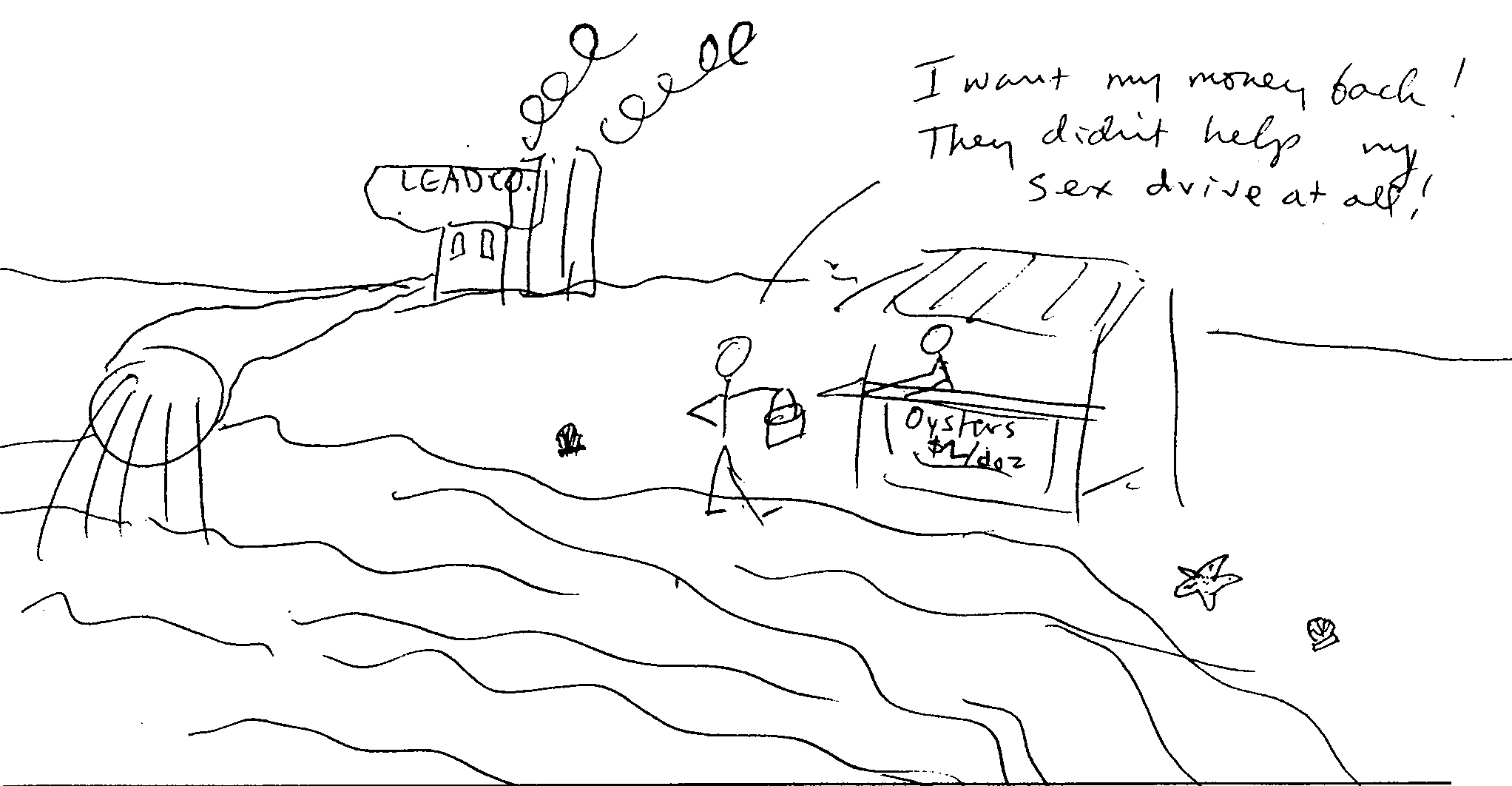
Is cadmium worse than lead? Reprinted from Toxic. March 1994 with permission. Cadmium is a heavy metal with wide use and distribution in industrial processes. Sources include mining and metallurgy; manufacturing and processing industries; metal finishing; sewage disposal; combustion of fuels and wastes; pesticides and fertilisers. Cadmium is a by-product of zinc and lead smelting. The toxicology of cadmium is comprehensively reviewed by Friberg et al 1986, and Robards and Worsfold 1991. Along with lead and mercury it is a "heavy" metal of environmental significance because of documented adverse effects in animal studies at low doses and in human epidemiology - and because of widespread environmental distribution. Environmental sources Cadmium is more readily taken up by plants than other metals such as lead. In this context, the cadmium content of phosphate fertiliser is a significant source. Cadmium content of Australian fertilisers is in the range 2060 ppm, and is derived mainly from rock phosphate. Williams has reported the problems of trace metals in superphosphate. Tobacco. tomatoes and brassicas take up cadmium more efficiently from soils than some other crops. Studies have shown a slow but steady increase in the cadmium content of vegetables over the years, and consequent increase in body burdens. Toxicology Although high levels of cadmium can cause acute effects, the principal long-term effects of low-level exposure to cadmium are chronic lung disease, emphysema and chronic kidney disease. Effects on the cardiovascular and the skeletal system have also been reported. People heavily exposed in Japan developed Itai-Itai disease which is characterised by bone pain, osteomalacia and osteoporosis. Kidney and skeletal effects appear not to be reversible and may be progressive according to follow-up studies of exposed populations. As with lead, cadmium is associated with increased blood pressure in several studies of occupationally-exposed workers. Electrical and biochemical heart disturbances have also been reported in experimental animals. The IARC rates cadmium as a probable human carcinogen, category 2A, based on animal studies and human occupational epidemiology. This evidence is much more developed than for lead. Human studies have found increases in lung cancer and to a lesser extent, cancer of the prostate. Much recent interest centres on the spermatogenic effects of low levels of cadmium exposure. A recent paper by Kok-War Hew et al shows that a single dose of 1 mg/kg of cadmium chloride resulted in failure of spermiation in experimental rats. Poor sperm characteristics have been correlated with high cadmium blood levels (mean 1.35 µg/dl) in human studies. (Archives of Andrology 29/2, 177-183, 1992, abstract). Cadmium is a toxic, persistent and bioaccumulating metal which is increasing in the environment and human tissue.
|
||
|
About
Us |
bell
system lead poisoning |
Contact Us
| Council
LEAD Project | egroups | Library
- Fact Sheets | Home
Page | Media Releases Newsletters | Q & A | Referral lists | Reports | Site Map | Slide Shows - Films | Subscription | Useful Links | Search this Site |
|||
| Privacy Policy | Disclaimer | |||
|
Last
Updated 01 November 2012
Copyright © The LEAD Group Inc. 1991- 2012 PO Box 161 Summer Hill NSW 2130 Australia Phone: +61 2 9716 0014 |
|||