|
|
||||||
|
LEAD Action News Vol 2 no
1 Summer 1994. ISSN 1324-6011 |
||||||
|
About Us
|
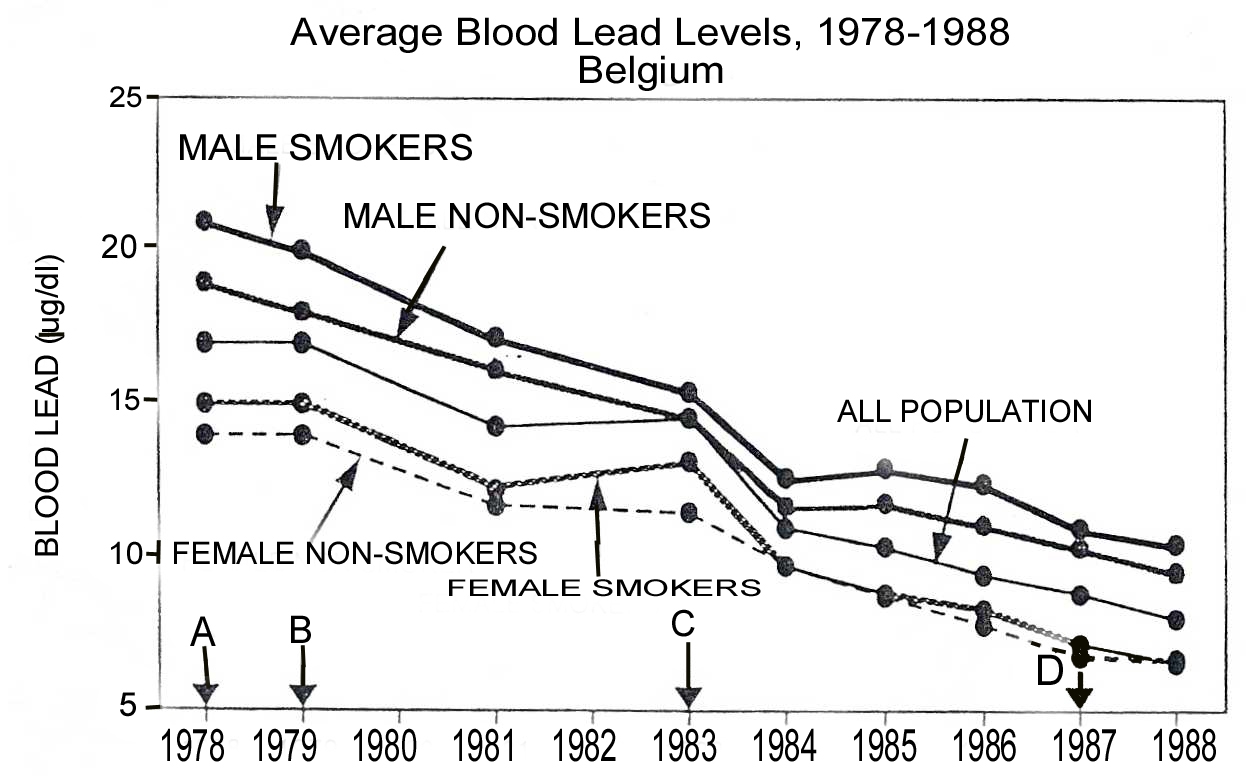
Smoking and Lead It has long been known that cigarettes contain lead (probably from lead arsenate used as an insecticide on tobacco crops) and that smokers contain more lead than non-smokers (see graph) and passive smokers, including children, similarly have a higher blood lead than those not exposed at home. In LEAD Action News Volume 1 No.3 Spring 1993, we cited an example where lead workers who smoked had average blood lead levels of 50 µg/dL compared to an average of 30 µg/dL for non-smokers. This may be due to lead particles on hands, face, hair, clothing etc and in the air, being vaporised by the burning cigarette tip and the fumes being more bioavailable on inhalation than the ever-present lead particles. Recently, a caller said two adult males had blood tests after renovating a house together. The smoker had a blood lead of 45 µg/dL while the non-smoker, who also took a range of dietary supplements daily, had a lead level of less than 10 µg/dL. Should renovators be advised not to smoke on the job?
|
|||||
|
About
Us |
bell
system lead poisoning |
Contact Us
| Council
LEAD Project | egroups | Library
- Fact Sheets | Home
Page | Media Releases Newsletters | Q & A | Referral lists | Reports | Site Map | Slide Shows - Films | Subscription | Useful Links | Search this Site |
||||||
|
Last
Updated 12 November 2012
|
||||||