|
||||||||||||||||||||||||||||||||||||
|
||||||||||||||||||||||||||||||||||||
|
Green Lead MCA speech Notes for the PowerPoint
presentation |
||||||||||||||||||||||||||||||||||||
|
About Us Visitor
Number |
||||||||||||||||||||||||||||||||||||
|
"GREEN LEAD" – OXYMORON OR FUTURE VISION? Elizabeth O’Briena,
Cornelia Dostb, Bei Quc a Manager, b,c Interns, Contents Facts of lead poisoning worldwide US research predicts that some 30 million Americans are at risk from early death from lead due to having exceeded a blood lead level of 20 µg/dL at least once in their adulthood (Lustberg and Silbergeld, 2002). If the US rate of exposure – remembering that the US was the first country to begin phasing out the most dispersive use of lead, leaded gasoline in 1972 (50 years after it’s introduction) - has such a huge predicted impact in the US, then what must be the impact of lead on the global early death rate and indeed on the life quality of the ageing? The Global Lead Advice and Support Service (GLASS) predicts that researching appropriate advice on treatment or care of the ageing population will be a huge task of lead poisoning management for the future, as we move at least one lifetime away from the 1970s and 1980s, the great era of lead poisoning due to leaded petrol. "With so many people having higher blood lead levels in the past than today, it is little wonder that we associate ageing with many of the effects of lead poisoning, but especially:- poor memory and hearing, falls (from loss of balance), reduced sperm count, loss of libido, strokes and heart attacks (from raised blood pressure), tooth decay, Alzheimers disease. It is fair to say that all these effects of lead add up to a reasonable description of what we think of as "normal" ageing and it is certainly time that we measured blood lead levels in older people who display these symptoms before discounting their symptoms as just "a natural part of getting old" (Bailey, 2003) The World Health Organisation (WHO) estimates that there are 120 million people worldwide who are lead poisoned i.e. have a blood lead level greater than 10 micrograms per decilitre (µg/dL) (Fewtrell et al, 2003). Recent research indicates that the aim should be to get everyone below 5 µg/dL. So it would be more reasonable to see our aim as reducing the blood lead levels of the 240 million people WHO estimates have a blood lead level greater than 5 µg/dL. But actually, looking at the blood lead surveys that have been done, even this huge figure would seem to be an underestimation. Sure, the only Australian blood lead survey of children in 1996 found 7.3% of preschoolers were lead poisoned (and this is probably an underestimate) but in a Chinese meta-analysis more than one third of the children in China were found to have blood lead levels greater than 10µg/dL. In an Indian survey of 2,031 children and adults in 5 cities, more than half of them had blood lead levels greater than 10 µg/dL (George Foundation, 1999). And in just one African city Johannesburg, which may be representative of all the cities in the 43 African countries still using leaded petrol – 78% of the children were lead poisoned as shown in Table 2. Henry Falk’s Case Study of Lead Poisoning (Falk, 2003), reports that people living right next to backyard smelters, mines or shops where lead acid batteries are repaired, typically have a higher blood lead level than 10µg/dL (Falk, 2003). The results of a study by Wang Sun-qin, Zhang Jin-liang in 2004 showed that blood lead levels among Chinese children are very high and are considered to be one potential environmental risk factor for children’s development (Wang and Zhang, 2004). Table 2: Blood Lead Levels (BLL) of children in various countries
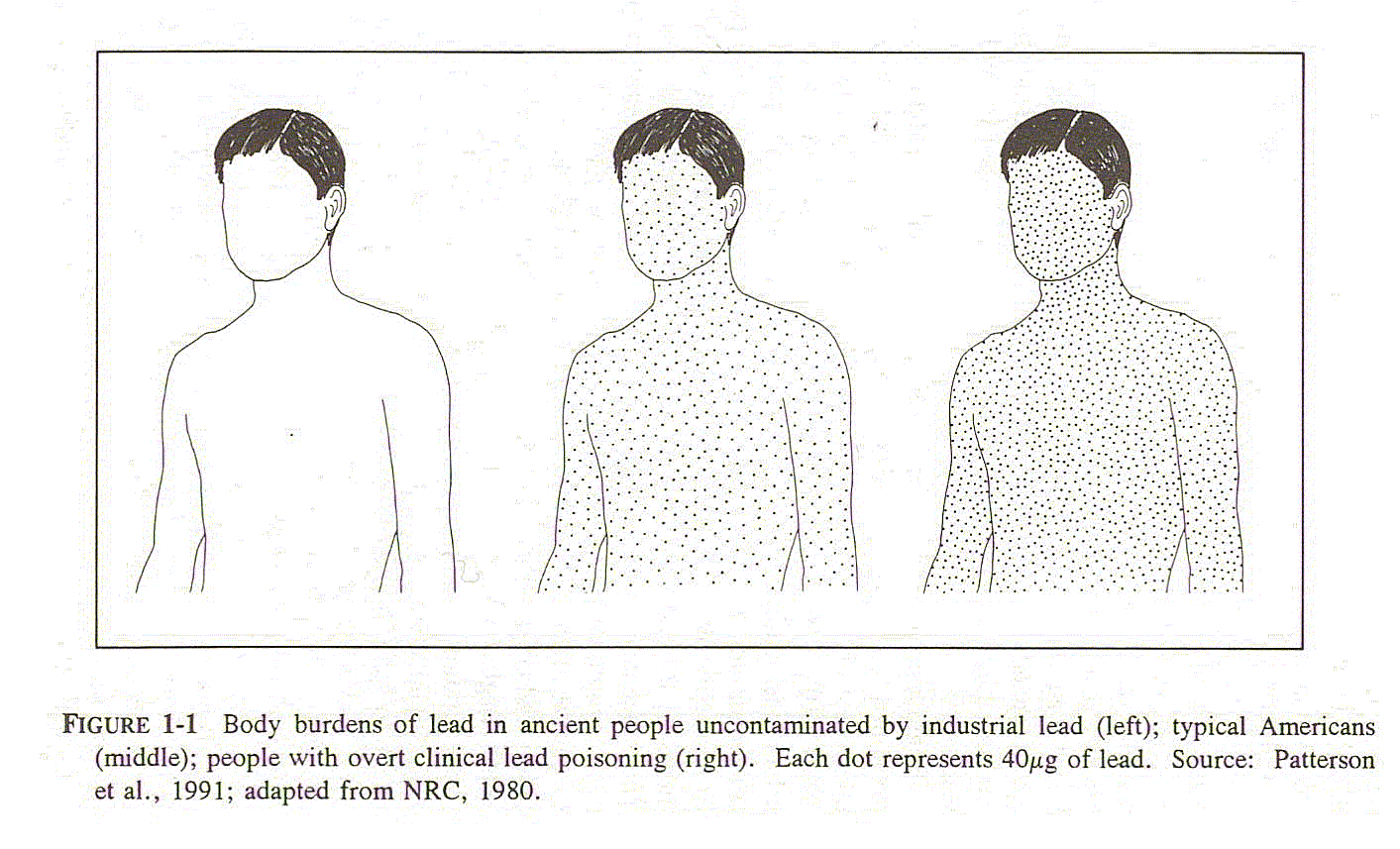
It is salutary, to reflect on just how much lead is in a "modern" human, and how badly poisoned some people are, compared to humans of earlier times (see Figure 6). Figure 6. Lead in human bodies at different times (NRC, 1993) Contents |
||||||||||||||||||||||||||||||||||||
|
About
Us |
bell
system lead poisoning |
Contact Us
| Council
LEAD Project | egroups | Library
- Fact Sheets | Home
Page | Media Releases |
||||||||||||||||||||||||||||||||||||
|
Last Updated 21 August 2014
|
||||||||||||||||||||||||||||||||||||