|
|||||||||||||||||||
|
|||||||||||||||||||
|
Green Lead MCA speech Notes for the PowerPoint
presentation |
|||||||||||||||||||
|
About Us Visitor
Number |
|||||||||||||||||||
|
"GREEN LEAD" – OXYMORON OR FUTURE VISION? Elizabeth O’Briena,
Cornelia Dostb, Bei Quc a Manager, b,c Interns, Contents You take the lead out of the earth, (adapted from Who reaps the profit? Who pays the price? Rosselson, 1981) I’m here to talk about the price. There’s a lot of
lead out there
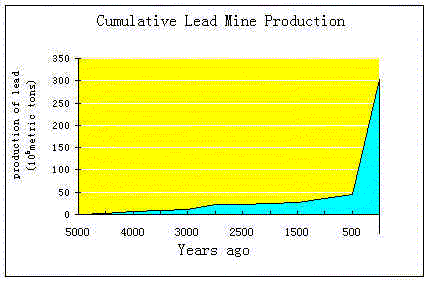
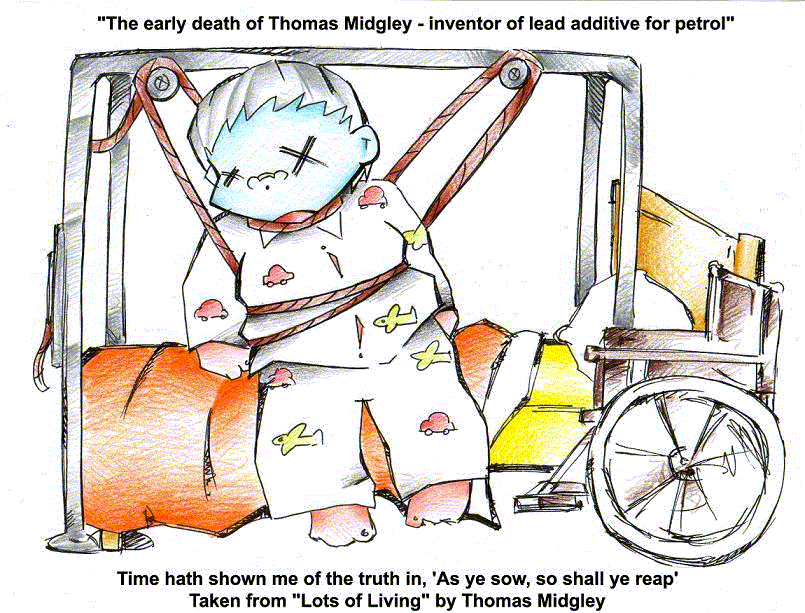
"Since ancient times, lead has brought us great benefits but also innumerable poisonings, particularly amongst workers and children" (UNEP, 2002), said Executive Director Klaus Toepfer of the United Nations Environment Programme. The authors of this paper have tried to analyze both sides of the question in the title of this speech – "green lead" as an oxymoron as well as a future vision. Therefore different sources were used that should make the difficulty, but also challenge, of this paper’s question, clearer. Jamie Lincoln Kitman contends that: "The makers of leaded gasoline systematically suppressed information about the severe health hazards of their product for decades, even though they knew from the mid-1920s on that leaded gasoline was a public health menace" (Fenton Communications, 2000). According to US experience the phase out of leaded petrol is essential in reducing the rates of lead poisoning among children. Especially in developing countries using leaded petrol combined with factors such as high population density near roads, poor-quality automobiles, high rates of iron deficiency due to poor diet, hot climates and dusty conditions contributes to a dangerous level of lead exposure. Many studies have already established that the phasing out of leaded petrol leads to an improvement in the blood lead level of inhabitants especially among children who are more likely to be affected (e.g. Bangkok, Mexico City) (Falk, 2003). Accordingly, a lot of international health agencies, national governments and several main donor organizations started to concentrate on the phasing out of leaded petrol, arguably the most dispersive form of lead. The global phase-out will be the first great environmental health policy success story when it is achieved but no industry group is pushing for that to happen earlier than 2010 – which will be 38 years after the process began in the US. Due to an immense lack of product stewardship the following countries still have to phase out leaded petrol and need help with environmental as well as health related regulations. And still the question remains who of the countries that already made the contribution to a cleaner environment by phasing out of leaded petrol is exporting their mined lead to make the lead additive for petrol in other countries? Is Australia one of them since it is the biggest exporter of lead worldwide? (Figure 2, Phillips , 2005 and poem by Midgley, ~1926)
Contents |
|||||||||||||||||||
|
About
Us |
bell
system lead poisoning |
Contact Us
| Council
LEAD Project | egroups | Library
- Fact Sheets | Home
Page | Media Releases |
|||||||||||||||||||
|
Last Updated 21 August 2014
|
|||||||||||||||||||